
Creator marketing is having its moment in the sun.
Reporting on the 2026 Cannes Lions International Festival of Creativity, marketing strategist Eugene Healey described creators as “the story of Cannes Lions 2026”, concluding that the creator market was “officially mature”.
Ironically, Eugene was there as part of the festival’s own creator program, which was reportedly bigger than ever.
Some of the festival’s most celebrated work, from Heineken to Vaseline, demonstrated the growing influence of creators on the advertising industry. It’s quite the development for an industry that’s spent much of its history building mass media campaigns around a single, carefully controlled creative idea.
Eugene also contributed to The Creator Effectiveness Playbook, developed by System1, WPP Media and TikTok, which examines what makes creator marketing effective and how brands can get better results from their investment.
As the playbook puts it, “Creators have moved from the edge of the media plan into the center of how brands show up.”
You only have to open your phone for a minute to see it happening, from KFC’s latest pickle range to the couch of your dreams from Koala, and everything in between.
Creator marketing is here to stay. The question for brands is how to incorporate it into an already crowded mix of channels, with budgets under pressure and a growing expectation to show up consistently.
So, how do you make creator marketing work without losing what makes your brand distinctive?
In some ways, creator marketing is simply the latest evolution of something brands have been doing from the beginning.
Word of mouth is one of the oldest forms of marketing, and brands have long partnered with influential people to build credibility, borrow cultural relevance and reach new audiences.
Celebrity endorsements have historically relied heavily on status and recognition. But the real opportunity goes beyond having a famous face associated with your product.
One of the greatest benefits of working with an ambassador, influencer or ‘creator’ is the potential to build an emotional connection with an audience.
As Paul McClean, Senior Vice President at Kantar, explains, advertising that generates an emotional response is more likely to create memories and associations that influence future decision-making.
When someone already has positive feelings towards a creator, there’s an opportunity for those feelings to extend to the brands they work with.
And in social media environments, the evidence is particularly compelling. According to The Creator Effectiveness Playbook, creator ads deliver 23 per cent more ‘brand memory lift’ than brand-made ads on short-form video.
That’s an important distinction, because the research isn’t simply measuring likes, views or engagement. It’s looking at whether people actually remember the brand after seeing the advertising.
The same research found that engagement rates had virtually no relationship with brand memory lift. Instead, creative quality, creator recognition and brand fit were the factors that made the greatest difference.
So there’s a strong case for working with creators when the goal is to build lasting brand associations.
For marketers who’ve spent years learning the importance of consistency and control, creator marketing can be an uncomfortable proposition.
We’re taught to build strong brands through distinctive assets, consistent messaging and creative ideas that are carefully executed across channels.
Then along comes creator marketing, asking us to hand some of that responsibility to someone who might have their own ideas about how the brand should appear.
What could possibly go wrong?
Of course, the concern isn’t entirely unfounded. A poorly chosen partnership or an off-brand execution can undermine the work that’s gone into building a brand.
But there’s an equally significant risk in treating creators like another advertising channel and expecting them to deliver a conventional brand campaign.
Creators have built their audiences through their own personalities, perspectives and styles of content. Their followers know what to expect from them, and they’ve developed a level of trust that brands can benefit from.
Ask a creator to abandon everything that makes their content appealing in favour of a heavily scripted product message, and you’re likely to lose the very thing you partnered with them for.
The challenge is finding the balance between brand consistency and creative freedom.
That means being clear about the role your brand needs to play, while giving creators the flexibility to bring it to life in a way their audience will actually want to watch.
The brands getting creator marketing right understand which elements of their identity need to remain consistent and where there’s room to experiment.
Their products, positioning and distinctive brand assets provide the foundation. The way those elements are expressed can then adapt to different creators, communities and cultural contexts.
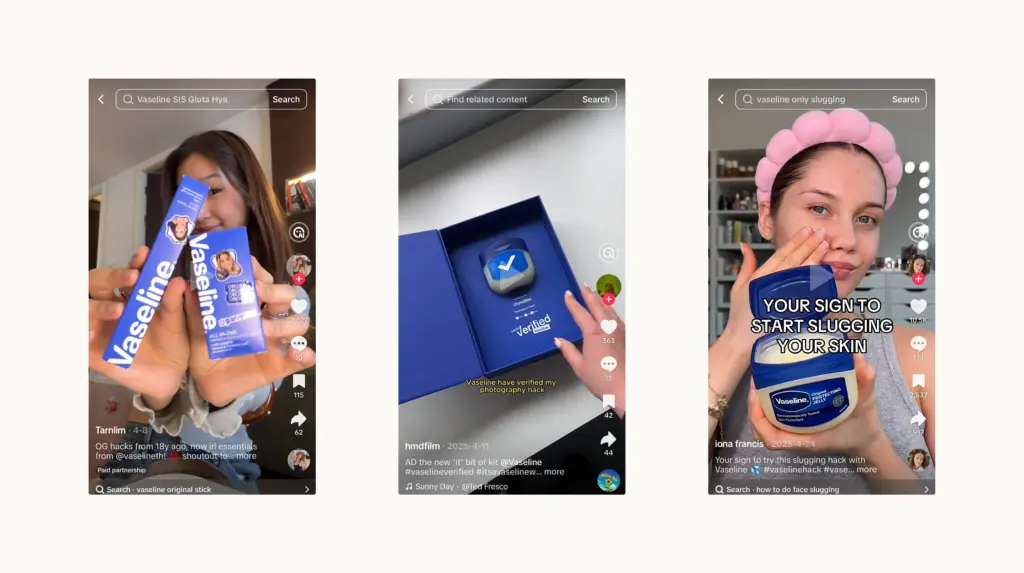
A brilliant example is Vaseline Verified, one of the most celebrated campaigns at Cannes Lions.
For more than 150 years, people have been finding their own uses for Vaseline, and social media has given those discoveries an enormous audience.
From beauty routines and fragrance hacks to preventing chafing during marathons, millions of people were already sharing inventive ways to use the product.
Rather than trying to steer the conversation, Vaseline decided to pay attention.
Working with creators, the brand identified popular hacks circulating online and put them to the test in Unilever’s research and development laboratories. Those that worked received the Vaseline Verified seal of approval, with the brand then amplifying the creators and communities responsible for sharing them.
It was a clever way of combining the credibility of a heritage brand with the creativity of its audience. And importantly, Vaseline didn’t need to reinvent its product or impose a new brand message on these communities. It found ways to participate in conversations where the product already had a natural role.
Nathalia Amadeu, Global Brand Director for Vaseline at Unilever and a speaker at Content Summit 2027, has described how the campaign challenged decades of conventional thinking about brand control. Instead of treating influencers as media channels, Vaseline began treating them as co-authors of the brand’s stories, and the results have extended well beyond social media.
Vaseline Verified helped drive double-digit brand growth and opened up new opportunities for product development, retail partnerships and innovation.
In 2026, Vaseline launched Vaseline Originals, a range of products inspired by creator hacks, including a brow tamer and primer/highlighter jelly. Both sold out within minutes of their TikTok Shop launch in Thailand.
What began as an exercise in listening to consumers has influenced how Vaseline develops products, builds partnerships and identifies commercial opportunities. It’s a fascinating example of how creator marketing can influence business strategy, rather than simply execute it.
Closer to home, Australian furniture brand Koala has demonstrated how effective creator partnerships can feel when the product fits naturally into the creator’s world.
Take its collaborations with creators such as Liz Miu. Rather than interrupting a video to list the features and benefits of a sofa, Koala allows its products to become part of the creator’s storytelling.
The product is still present and recognisable, but entertainment comes first. The content feels at home in the creator’s feed, which is precisely where the brand wants to be.
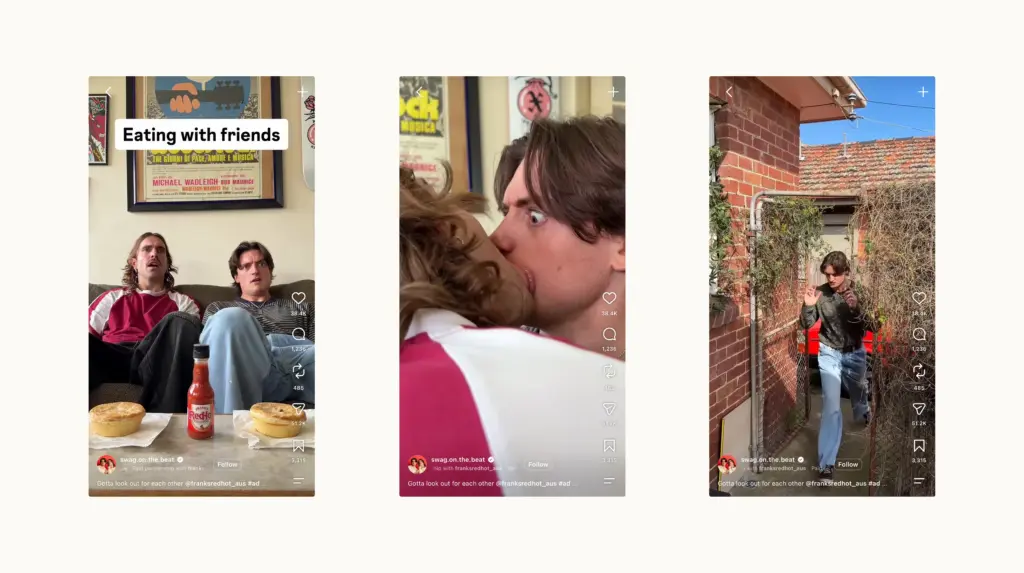
We’ve taken a similar approach at The Content Division. When Frank’s RedHot wanted to activate its brand ahead of the footy finals, we partnered with comedy duo Swag on the Beat to create content that would feel natural in their audience’s feeds.
The key was letting Swag be Swag. Rather than handing the duo a conventional advertising script, we worked with their established style of comedy and found a natural role for Frank’s RedHot within it.
It’s an approach that’s becoming increasingly common, from MECCA’s creator-led beauty content to Maccas developing products with social media culture in mind.
And while the executions can look wildly different, the principle remains the same. Find where your brand naturally fits, then work with creators who can bring it to life.
The growing influence of creators doesn’t mean brand strategy, consistency or creative discipline are suddenly irrelevant.
If anything, they become even more important.
Brands need to understand their positioning, their distinctive assets and the associations they want to build. They also need to recognise when a creator’s audience, content style and cultural relevance offer an opportunity to communicate those things in a different way.
The Creator Effectiveness Playbook reinforces this point, finding that brand fit can be a better predictor of effectiveness than creator fame. A smaller creator whose content naturally accommodates your brand can be more valuable than a major personality delivering an awkward endorsement.
It’s a reminder that creator selection should be a strategic decision, rather than a popularity contest.
Brand leaders still have an important role to play in defining the strategy, choosing the right partners and setting the boundaries.
But once those foundations are in place, they need to give creators room to do what made them worth partnering with.
Because if you wanted someone to follow your brand guidelines to the letter, you probably didn’t need a creator in the first place.